Your selected day · Godiputamatiapara
2026-10-31 · local time
- Sunrise
- 31 Oct, 05:48 am
- Rahu Kaal
- 31 Oct, 08:39 am – 31 Oct, 10:05 am
- Krishna Shashthi · tithi interval
- 30 Oct, 07:25 pm – 31 Oct, 04:58 pm
- Krishna Saptami · tithi interval
- 31 Oct, 04:58 pm – 1 Nov, 02:52 pm
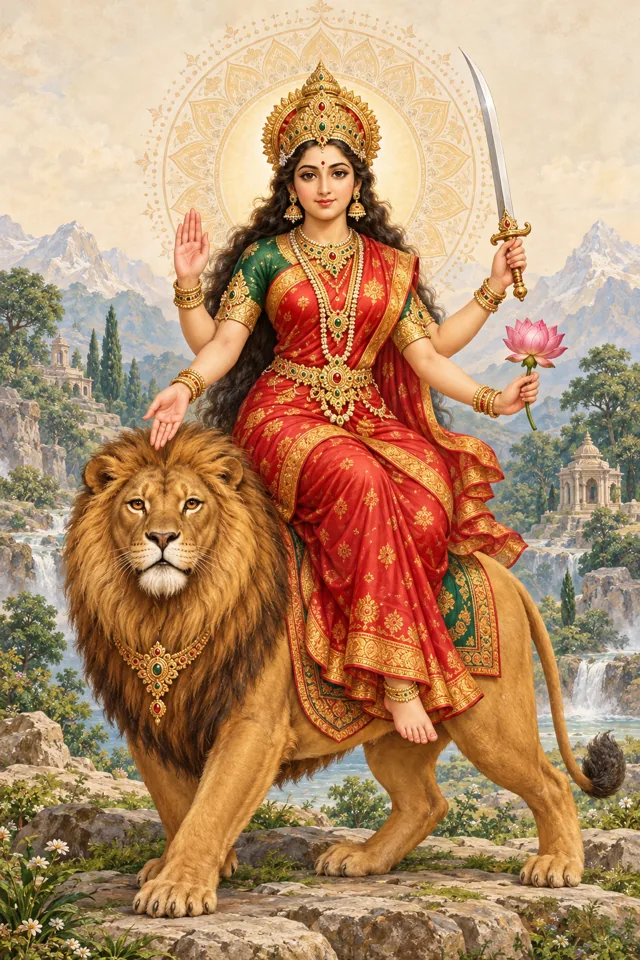
Sixth Navadurga · Maa Katyayani worship
Katyayani is associated with sage Katyayana and the warrior presence of Devi. Her sword and lotus hold resolve and grace together. The household reading places courage in the service of a clear and generous intention, while her protective image offers reassurance.
Prepare your puja
Prepare clean water, fresh flowers, a lamp and the food offering customary in your home. Keep the arrangement simple and the prayer text ready so attention can remain on the invocation and its meaning.
Simple home puja vidhi
Read more · step-by-step home worship
- Set out the shrine
Clean the prayer space and arrange the image and offerings. Sit comfortably and settle your attention before beginning.
- State a clear intention
Begin with the familiar opening prayer. Remember Maa Katyayani and reflect on a responsibility that calls for courage and fairness.
- Offer flowers and recite
Use the name invocation below and continue with a familiar Devi hymn or Saptashati passage. Read at a pace that allows attention to the meaning.
- Conclude with gratitude
Offer bhog and aarti according to household practice. Share prasad and choose a thoughtful action through which to carry the day’s intention forward.
Read more · Household prayer and specialised observances
Katyayani appears in more than one devotional setting. A simple Navadurga name-prayer should not be confused with a separate vow or an initiated practice that has its own text, procedure and purpose. This reading provides a household introduction to her place in Navratri.
Questions about this observance
Does this prayer guarantee marriage or a chosen outcome?
No. Devotional petitions express hopes and intentions; this guide does not promise a marriage, relationship or other specific result.
Can I read Durga Saptashati today?
A familiar Saptashati reading can accompany the prayer. Follow your household’s arrangement for chapter selection and any formal recitation procedure.
Katyayani: resolve guided by grace
The sixth form is remembered through the name of sage Katyayana and the warrior presence of Devi. The sword and lotus express resolve alongside grace. Her worship gives devotees a language for strength, dignity and an intention directed toward good.
Katyayani is associated with sage Katyayana and with the warrior aspect of the Goddess. She occupies the sixth place in the familiar Navadurga sequence. Her name is remembered in devotional practice as an invocation of strength.
The common four-armed image pairs a sword and lotus with gestures of protection and blessing. A lion carries her. The lotus alongside the sword makes the picture more than a display of force: it also holds space for gentleness, restraint and a clear purpose.
Dhyana · contemplation
Rest your attention on the lotus before looking at the sword. Ask what deserves your commitment, and how firmness can remain considerate. Begin the name prayer with that intention.
A guided reflection by PanchangSaathi.
Japa · name mantra
ॐ देवी कात्यायन्यै नमः॥
Oṃ Devī Kātyāyanyai Namaḥ.
Salutations to Goddess Katyayani.
Recite at a comfortable pace, following your family’s practice.
Clothes, colours & flowers
Navratri colour sequences vary with the year, region and local custom. Wear the colour followed by your family or community, or choose clean, comfortable clothes for home worship. A published day-colour list is not a fixed colour rule for a Devi form.
Read more · planning your Navratri prayer
When should I begin?
For a daily reading, choose a quiet time you can return to. If you perform a timed ceremony, open the local festival timings using the date and place you selected.
How much should I recite?
Start with the name mantra and a familiar passage. A longer recitation can be divided into comfortable sessions. There is no compulsory repetition count in this household reading guide.
What can the whole family do?
One person can read aloud, another can prepare the offering, and others can listen or join the name prayer. Finish by sharing prasad and a prayer for everyone’s wellbeing.
Where can I read further?
Open the linked Saptashati collection for its thirteen chapters and companion stotras, or move to the next Navadurga reading below.
Carry the meaning into your day
Choose one responsibility that you have been postponing. Prepare what is needed, ask for help where appropriate and act without needless confrontation. The devotional theme is courage used with care. Family customs around marriage prayers may differ; this reading does not prescribe an initiated mantra or guarantee a relationship outcome.
Continue your Navratri reading
Reading reference
Traditional name invocation; original explanations and guided reflections by PanchangSaathi. Image credit appears with the illustration. Traditional text and iconography reference.