Your selected day · Thane
2025-12-04 · local time
- Sunrise
- 4 Dec, 06:57 am
- Rahu Kaal
- 4 Dec, 01:51 pm – 4 Dec, 03:14 pm
- Shukla Chaturdashi · tithi interval
- 3 Dec, 12:26 pm – 4 Dec, 08:38 am
- Shukla Purnima · tithi interval
- 4 Dec, 08:38 am – 5 Dec, 04:44 am
- Krishna Pratipada · tithi interval
- 5 Dec, 04:44 am – 6 Dec, 12:56 am
Navratri begins · Maa Shailaputri worship
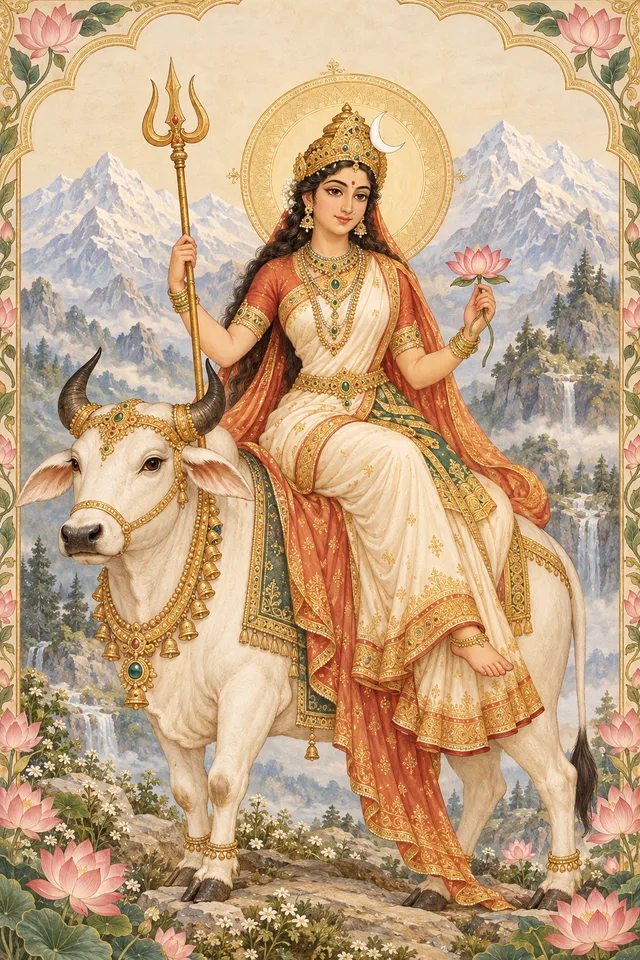
Shailaputri, the daughter of the mountain, opens the familiar nine-form sequence. Her bull conveys steadiness, while the lotus and trident bring devotion and strength together. Begin the observance with a manageable intention: a daily prayer, a reading or an act of care that you can sustain through the nine nights.
Prepare your puja
Arrange clean water, fresh flowers and a fresh household food offering. Prepare the lamp and reading materials before sitting down. If a Kalash has been established, keep its place orderly and undisturbed throughout the observance.
Simple home puja vidhi
Read more · step-by-step home worship
- Prepare a settled beginning
Clean the shrine and wear comfortable, clean clothes. Place the image where everyone can see it and arrange the offerings within easy reach.
- Remember Ganesha and state your sankalpa
Use your familiar opening prayer. State the intention for your observance in simple words and remember Maa Shailaputri as a source of steadiness.
- Offer and begin the reading
Offer flowers and water, recite the name invocation below and read the short traditional prayer or a familiar Devi hymn. Allow time for everyone to listen.
- Conclude and preserve the shrine
Offer bhog, perform the household aarti and share prasad. Keep lamps attended and leave the established worship space ready for the next day.
Read more · Daily prayer and Kalash Sthapana
Kalash or Ghatasthapana begins an established Navratri observance in many households. Its appointment depends on the local festival calendar and the procedure being followed. The daily Shailaputri name prayer is a separate devotional activity; it does not create a replacement Kalash appointment.
Questions about this observance
Is the first form a fixed Gregorian date?
No. The devotional sequence starts with Shailaputri, while the civil date of Navratri changes each year. Check the selected place and festival date before planning a timed ceremony.
Must every household establish a Kalash?
Household practices differ. A family can offer a simple daily prayer without claiming to perform a formal rite that it has not undertaken. Follow the practice of your family or temple.
Why Navratri begins with Shailaputri
The first form invites a settled beginning to Navratri. Mountain imagery, the bull and the lotus bring together firmness, patience and devotion. Her remembrance can accompany the intention with which a family begins its nine-night observance.
Shaila means mountain and putri means daughter. Shailaputri recalls Parvati as the daughter of the Himalaya; devotional narratives connect her with the earlier story of Sati. She opens the familiar Navadurga sequence, giving the worshipper a point of beginning.
Her two hands carry a trident and lotus, and her mount is a bull. The crescent on her crown appears in the short prayer. These details help identify this form even when paintings differ in colour, clothing or setting.
Dhyana · contemplation
Look at the stillness of the bull and the open lotus. Let your attention settle before beginning the prayer. Hold one clear intention for your observance without trying to plan every moment of the nine nights.
A guided reflection by PanchangSaathi.
Traditional short prayer
वन्दे वाञ्छितलाभाय चन्द्रार्धकृतशेखराम्।
वृषारूढां शूलधरां शैलपुत्रीं यशस्विनीम्॥
Vande vāñchitalābhāya candrārdhakṛtaśekharām.
Vṛṣārūḍhāṃ śūladharāṃ śailaputrīṃ yaśasvinīm.
I bow to the glorious Shailaputri, who wears the crescent Moon, rides a bull and bears a trident, seeking her blessing.
Japa · name mantra
ॐ देवी शैलपुत्र्यै नमः॥
Oṃ Devī Śailaputryai Namaḥ.
Salutations to Goddess Shailaputri.
Recite at a comfortable pace, following your family’s practice.
Clothes, colours & flowers
Navratri colour sequences vary with the year, region and local custom. Wear the colour followed by your family or community, or choose clean, comfortable clothes for home worship. A published day-colour list is not a fixed colour rule for a Devi form.
Read more · planning your Navratri prayer
When should I begin?
For a daily reading, choose a quiet time you can return to. If you perform a timed ceremony, open the local festival timings using the date and place you selected.
How much should I recite?
Start with the name mantra and a familiar passage. A longer recitation can be divided into comfortable sessions. There is no compulsory repetition count in this household reading guide.
What can the whole family do?
One person can read aloud, another can prepare the offering, and others can listen or join the name prayer. Finish by sharing prasad and a prayer for everyone’s wellbeing.
Where can I read further?
Open the linked Saptashati collection for its thirteen chapters and companion stotras, or move to the next Navadurga reading below.
Carry the meaning into your day
Prepare a clean prayer space and the items your household normally uses. If your family performs Kalash Sthapana, open the festival panel for your chosen place before arranging the ceremony. Keep the devotional reading and the ritual appointment together, so you can return to both easily.
Continue your Navratri reading
Reading reference
Traditional name invocation and short prayer; original explanations and guided reflections by PanchangSaathi. Image credit appears with the illustration. Traditional text and iconography reference.