Your selected day · Agartala
2026-09-16 · local time
- Sunrise
- 16 Sept, 05:11 am
- Rahu Kaal
- 16 Sept, 11:20 am – 16 Sept, 12:52 pm
- Shukla Panchami · tithi interval
- 15 Sept, 07:45 am – 16 Sept, 09:00 am
- Shukla Shashthi · tithi interval
- 16 Sept, 09:00 am – 17 Sept, 10:48 am
Maha Navami · Maa Siddhidatri worship
Navami brings the nine-night observance towards completion. Siddhidatri, the ninth Navadurga form, is remembered through the language of spiritual fulfilment. A concluding prayer can express gratitude for the worship, the household and everyone who helped sustain it.
Prepare your puja
Prepare fresh flowers, water and the food offering followed by your household. Halwa, puri, chana or kheer are familiar concluding offerings in many families. A simple fresh offering is enough for a short household prayer; no single menu applies to every region.
Simple home puja vidhi
Read more · step-by-step home worship
- Return to your sankalpa
Prepare the shrine and recall the intention with which Navratri began. Begin with the familiar opening prayer and invoke Maa Siddhidatri.
- Offer and give thanks
Offer flowers, water and bhog. Recite the name mantra and a familiar concluding Devi prayer, remembering those who supported the observance.
- Complete household worship
Perform aarti, distribute prasad and conduct Kanya Pujan if Navami is your family’s chosen day. Keep the meal and welcome unhurried.
- Follow the concluding rite separately
If a homa, Kalash conclusion or fast-breaking forms part of your observance, follow that specific procedure and timing. Do not extinguish or dismantle an established observance simply because the daily reading has ended.
Read more · Navami homa, Ayudha Puja and completion
Navami homa is part of many formal Durga Puja observances. A fire ritual needs its own procedure, trained guidance and safe arrangements. Southern traditions may honour tools, instruments and books through Ayudha or Saraswati Puja around this period. These are related regional celebrations, not interchangeable names for one household rite.
Questions about this observance
Does the ninth form always fall on Navami at sunrise?
A Navadurga sequence number and a lunar tithi are different measures. A tithi can repeat at sunrise or pass between two sunrises. Use the selected local festival calendar for the observance and keep the form’s devotional sequence distinct.
Is Vijayadashami the same as Maha Navami?
No. Maha Navami belongs to the ninth lunar tithi; Vijayadashami is the following festival associated with Dashami. Their local dates and ritual appointments must be checked separately.
Closing the sequence with gratitude
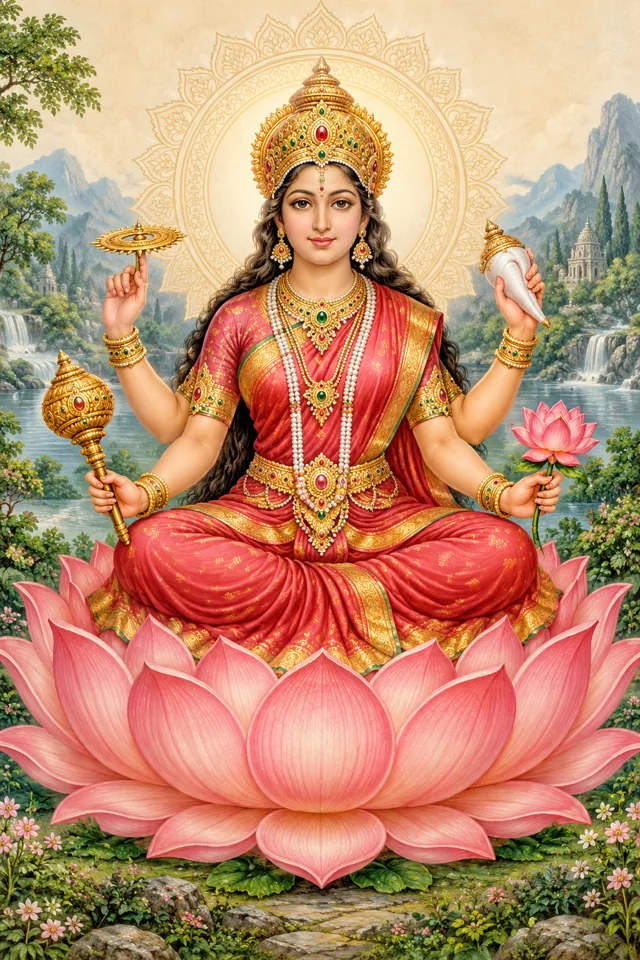
The ninth form completes the familiar sequence with the image of spiritual fulfilment. Her lotus seat and four emblems invite a concluding prayer of gratitude. The meaning can continue beyond the nine nights through study, service and a practice renewed each day.
Siddhidatri is remembered as the giver of siddhis, spiritual accomplishments, and completes the familiar Navadurga sequence. Her ninth place makes her a fitting focus for a concluding prayer and a return to the intention set at the beginning.
The four-armed form carries a discus, conch, mace and lotus. In this illustration she sits on a large lotus. Her name belongs to devotional tradition; it does not mean that a brief recitation can promise supernatural abilities or a particular result.
Dhyana · contemplation
Notice the lotus seat and the balanced arrangement of the four hands. Bring to mind the readings and prayers you have returned to. Let gratitude take the place of a demand for a result.
A guided reflection by PanchangSaathi.
Japa · name mantra
ॐ देवी सिद्धिदात्र्यै नमः॥
Oṃ Devī Siddhidātryai Namaḥ.
Salutations to Goddess Siddhidatri.
Recite at a comfortable pace, following your family’s practice.
Clothes, colours & flowers
Navratri colour sequences vary with the year, region and local custom. Wear the colour followed by your family or community, or choose clean, comfortable clothes for home worship. A published day-colour list is not a fixed colour rule for a Devi form.
Read more · planning your Navratri prayer
When should I begin?
For a daily reading, choose a quiet time you can return to. If you perform a timed ceremony, open the local festival timings using the date and place you selected.
How much should I recite?
Start with the name mantra and a familiar passage. A longer recitation can be divided into comfortable sessions. There is no compulsory repetition count in this household reading guide.
What can the whole family do?
One person can read aloud, another can prepare the offering, and others can listen or join the name prayer. Finish by sharing prasad and a prayer for everyone’s wellbeing.
Where can I read further?
Open the linked Saptashati collection for its thirteen chapters and companion stotras, or move to the next Navadurga reading below.
Carry the meaning into your day
Thank the people who helped with the observance and review the intention with which you began. Keep one manageable practice for the days ahead. If your family concludes a fast or performs other rites, follow its local schedule. The next reading on Vijaya Dashami explains the festival’s meanings across several traditions.
Continue your Navratri reading
Reading reference
Traditional name invocation; original explanations and guided reflections by PanchangSaathi. Image credit appears with the illustration. Traditional text and iconography reference.